
Thank you for Subscribing to Environmental Business Review Weekly Brief
This article is part of Environmental Business Review Vendor Viewpoint series featuring expert contributions nominated by our subscribers and reviewed by our editorial team.
Mold load within the interior of a home or facility has become an increasing concern of indoor environmental air quality experts and healthcare professionals. . However, industry protocols have largely remained stagnant, often rooted in decades old concepts from fields like asbestos removal. Over the past 15 plus years, Pure Maintenance has redefined the method of ridding indoor environments of an elevated mold load by recognizing these flaws and introducing an innovative whole-home approach that changes how we think about indoor environments.
One of Numerous Mistaken Approaches: Asbestos Protocols Applied to Mold
For years, the mold industry has relied on traditional containment protocols—principles originally designed for asbestos removal.
However, even the simplest analytical consideration leads to the obvious. The two contaminants are very different. This is far to serious of an issue to assume that what works with asbestos removal should work for mold. I would love to see the science and the lab testing on that decision.
Asbestos consists of finite, carcinogenic fibers that can contaminate a specific area when breaking down, or being removed. In this scenario, containment makes all the sense in the world.
Also consider that asbestos is finite. Asbestos has boundaries until it is removed. Asbestos is, by comparison, to mold, very tidy. Mold , on the other hand, is not anywhere close to being "tidy". This is not to suggest that asbestos is not dangerous. However, approaching mold as if it is asbestos or even slightly similar, fails fundamentally, as mold does not behave like asbestos.
Mold in a home consists of living organisms that colonize and produce spores throughout the entire environment. Mold can thrive in various locations and various surfaces in a home: Included but not all inclusive are air conditioning coils, window frames that condensate, sink drains, floor drains, bathrooms in general, and even within ductwork and household fabrics. It can spread easily when it spores, can colonize when it finds moisture. This continual elevating dynamic makes mold very difficult to pinpoint. Mold load in a home will always be worse next week than it is this week. It will not die on its own. The fact that there are a number of “hotspots” throughout the home, and the fact that most will admit that any and all testing is a crapshoot at best, makes elevated mold very difficult to quantify.
Moreover, the common practice of isolating work to specific areas under the assumption that remediation should focus solely on isolated points of water intrusion overlooks the reality of the situation. Mold often presents a systemic issue that requires comprehensive treatment rather than targeted solutions. Mold did not likely just happen to show up the day of the flood! Pure Maintenance believes the often quoted stat that well over 50 percent of homes in the United States has a mold problem. I believe it to be much greater.
So herein lies the conundrum. And its simply a “which came first, the chicken or the egg” scenario. Or better stated, which came first, the water or the mold.
If you believe the above stated estimate, its better than a 50 percent chance that the home already had an elevated mold issue before the flood, or leak, occurred. Therefore, containment only works if :
A - all mold colonies, spores and toxins held a quick meeting and decided to all float, walk or run to the area of water intrusion. Hopefully this meeting occurred before the containment was erected.
B - The homeowners were just lucky enough to not have any mold in the home before the leak or the flood.
Obviously, this is a semi-humorous way to point out the obvious. Which is, most homes already have mold issues before the water intrusion.
Therefore, its a stretch of the imagination to assume that containment and plastic, duct tape and twisty ties will return the home to health. Indeed, it may return the area of containment to moderately healthy after tear out and air scrubbing have occurred, but have we ever asked ourselves why 99 percent of all Traditional disaster companies only test inside the plastic bubble, and only after running air scrubbers. The answer is obvious. It's not their scope of work.
Is there a “lane” for disaster companies. There is more than a lane. There is a freeway. However, in order to satisfy common sense, we must, as an industry, commit to the idea that the entire home needs to be treated with a safe, whole home treatment to feel confident we are providing a safe living space to these families. Testing within the “scope of work” is going to give the homeowner and potentially the healthcare provider a false sense of security. And, as my own mothers death can attest, lead doctors down the wrong path of trusting the after tests provided to the customer, and therefore treating my mom with steroids and pain pills until she passed at 72. Had I began this journey just 10 years earlier, I likely could have realized that my mom was suffering from elevated mold in their home.
Pure Maintenance's Breakthrough: The Whole-Home Approach
In response to these shortcomings, Pure Maintenance developed a holistic, whole-home approach to mold.This innovative strategy acknowledges that visible mold is merely a symptom or a sign of a more extensive issue: an elevated mold load permeating the entire indoor environment. This does not mean that some “tear out” is not necessary. Of course it is. Pure Maintenance patented equipment is amazing, but its not magic. So I repeat, some tear-out may be necessary, and certainly all water issues need correction. After that, the real issue is returning the whole home to safe conditions.
Patented process and equipment
A pivotal aspect of Pure Maintenance’s approach is their patented equipment, which uses a unique oxidizing vapor phase process. This Vapor helps destroy and denature not only visible mold but also hidden mold and airborne spores. By treating the entire home at a systemic level, Pure Maintenance ensures thorough and effective mold treatment, resulting in zero or close to zero surviving mold organisms on both porous, non-porous surfaces as well as in the air. This is validated anecdotally by thousands upon thousands of satisfied clients and a Google rating average of 4.9 throughout the World. Additionally, the science behind it has been validated by third-party testing conducted after each lab, and more impressively at Element Labs in Minnesota. GLP testing conducted in large spaces where millions upon millions of spores were annihilated using Pure Maintenance equipment and process. When experts say, "we need to follow the science". We welcome that sentiment. In fact, we are often at a loss of where any other science is applied to this industry.
A Healthier Solution: Avoiding Toxic Chemicals
Another defining feature of Pure Maintenance’s method is its commitment to using non-toxic solutions. EPA designated “Safer Choices”. Unlike many competitors that rely on harsh chemicals such as chlorine,
ammonia, or Dichloromethane, phenols or even formaldehyde, for mold treatment, Pure Maintenance prioritizes safe products. This method helps avoid what is essentially trading one toxin for another.
A Global Presence: Efficacy at Scale
Currently, Pure Maintenance treats an estimated 700 homes or facilities somewhere in the World each week. This impressive statistic exemplifies the effectiveness and efficiency of the company's whole home, whole facility approach, which has emerged as one of the few things that are actually validated by science.
Conclusion
It’s no wonder that so many Healthcare professionals will devote most of their time treating patients with elevated mold toxins in the body. In the words of Dr Jeffrey Wright who is on the Pure Maintenance staff, “mold illness is becoming epidemic”.
Again, Pure Maintenance will be the first to point out that this process is not a replacement for addressing an on-going moisture issue, nor is it a replacement for some material removal that is either damaged, completely full of mold, or compromises structural integrity. These are necessary, but the process cannot stop at that point.The entire home must be treated. What Pure Maintenance will do is ensure that the entire home is safe, if these other processes are addressed first, or if the home has mold with no obvious issues. (This occurs more than one would imagine). Pure Maintenance has developed a whole-home strategy that addresses mold contamination comprehensively. With cutting-edge technology and safe, non-toxic solutions, Pure Maintenance is proving that a better approach is not only possible—it may well become the new “science backed” industry standard.
For the mold and disaster industry to advance, it must acknowledge that mold contamination is rarely localized. Pure Maintenance’s success highlights the power of a holistic approach—one that treats the full extent of mold contamination throughout a home, not just the visible symptoms or where the water entry occurred. The narrative is evolving, and Pure Maintenance is at the forefront of this transformation.
One of Numerous Mistaken Approaches: Asbestos Protocols Applied to Mold
For years, the mold industry has relied on traditional containment protocols—principles originally designed for asbestos removal.
However, even the simplest analytical consideration leads to the obvious. The two contaminants are very different. This is far to serious of an issue to assume that what works with asbestos removal should work for mold. I would love to see the science and the lab testing on that decision.
Asbestos consists of finite, carcinogenic fibers that can contaminate a specific area when breaking down, or being removed. In this scenario, containment makes all the sense in the world.
Also consider that asbestos is finite. Asbestos has boundaries until it is removed. Asbestos is, by comparison, to mold, very tidy. Mold , on the other hand, is not anywhere close to being "tidy". This is not to suggest that asbestos is not dangerous. However, approaching mold as if it is asbestos or even slightly similar, fails fundamentally, as mold does not behave like asbestos.
-
For the mold remediation industry to evolve, it must recognize that mold contamination is not localized
Mold in a home consists of living organisms that colonize and produce spores throughout the entire environment. Mold can thrive in various locations and various surfaces in a home: Included but not all inclusive are air conditioning coils, window frames that condensate, sink drains, floor drains, bathrooms in general, and even within ductwork and household fabrics. It can spread easily when it spores, can colonize when it finds moisture. This continual elevating dynamic makes mold very difficult to pinpoint. Mold load in a home will always be worse next week than it is this week. It will not die on its own. The fact that there are a number of “hotspots” throughout the home, and the fact that most will admit that any and all testing is a crapshoot at best, makes elevated mold very difficult to quantify.
Moreover, the common practice of isolating work to specific areas under the assumption that remediation should focus solely on isolated points of water intrusion overlooks the reality of the situation. Mold often presents a systemic issue that requires comprehensive treatment rather than targeted solutions. Mold did not likely just happen to show up the day of the flood! Pure Maintenance believes the often quoted stat that well over 50 percent of homes in the United States has a mold problem. I believe it to be much greater.
So herein lies the conundrum. And its simply a “which came first, the chicken or the egg” scenario. Or better stated, which came first, the water or the mold.
If you believe the above stated estimate, its better than a 50 percent chance that the home already had an elevated mold issue before the flood, or leak, occurred. Therefore, containment only works if :
A - all mold colonies, spores and toxins held a quick meeting and decided to all float, walk or run to the area of water intrusion. Hopefully this meeting occurred before the containment was erected.
B - The homeowners were just lucky enough to not have any mold in the home before the leak or the flood.
Obviously, this is a semi-humorous way to point out the obvious. Which is, most homes already have mold issues before the water intrusion.
Therefore, its a stretch of the imagination to assume that containment and plastic, duct tape and twisty ties will return the home to health. Indeed, it may return the area of containment to moderately healthy after tear out and air scrubbing have occurred, but have we ever asked ourselves why 99 percent of all Traditional disaster companies only test inside the plastic bubble, and only after running air scrubbers. The answer is obvious. It's not their scope of work.
Is there a “lane” for disaster companies. There is more than a lane. There is a freeway. However, in order to satisfy common sense, we must, as an industry, commit to the idea that the entire home needs to be treated with a safe, whole home treatment to feel confident we are providing a safe living space to these families. Testing within the “scope of work” is going to give the homeowner and potentially the healthcare provider a false sense of security. And, as my own mothers death can attest, lead doctors down the wrong path of trusting the after tests provided to the customer, and therefore treating my mom with steroids and pain pills until she passed at 72. Had I began this journey just 10 years earlier, I likely could have realized that my mom was suffering from elevated mold in their home.
Pure Maintenance's Breakthrough: The Whole-Home Approach
In response to these shortcomings, Pure Maintenance developed a holistic, whole-home approach to mold.This innovative strategy acknowledges that visible mold is merely a symptom or a sign of a more extensive issue: an elevated mold load permeating the entire indoor environment. This does not mean that some “tear out” is not necessary. Of course it is. Pure Maintenance patented equipment is amazing, but its not magic. So I repeat, some tear-out may be necessary, and certainly all water issues need correction. After that, the real issue is returning the whole home to safe conditions.
Patented process and equipment
A pivotal aspect of Pure Maintenance’s approach is their patented equipment, which uses a unique oxidizing vapor phase process. This Vapor helps destroy and denature not only visible mold but also hidden mold and airborne spores. By treating the entire home at a systemic level, Pure Maintenance ensures thorough and effective mold treatment, resulting in zero or close to zero surviving mold organisms on both porous, non-porous surfaces as well as in the air. This is validated anecdotally by thousands upon thousands of satisfied clients and a Google rating average of 4.9 throughout the World. Additionally, the science behind it has been validated by third-party testing conducted after each lab, and more impressively at Element Labs in Minnesota. GLP testing conducted in large spaces where millions upon millions of spores were annihilated using Pure Maintenance equipment and process. When experts say, "we need to follow the science". We welcome that sentiment. In fact, we are often at a loss of where any other science is applied to this industry.
A Healthier Solution: Avoiding Toxic Chemicals
Another defining feature of Pure Maintenance’s method is its commitment to using non-toxic solutions. EPA designated “Safer Choices”. Unlike many competitors that rely on harsh chemicals such as chlorine,
ammonia, or Dichloromethane, phenols or even formaldehyde, for mold treatment, Pure Maintenance prioritizes safe products. This method helps avoid what is essentially trading one toxin for another.
A Global Presence: Efficacy at Scale
Currently, Pure Maintenance treats an estimated 700 homes or facilities somewhere in the World each week. This impressive statistic exemplifies the effectiveness and efficiency of the company's whole home, whole facility approach, which has emerged as one of the few things that are actually validated by science.
Conclusion
It’s no wonder that so many Healthcare professionals will devote most of their time treating patients with elevated mold toxins in the body. In the words of Dr Jeffrey Wright who is on the Pure Maintenance staff, “mold illness is becoming epidemic”.
Again, Pure Maintenance will be the first to point out that this process is not a replacement for addressing an on-going moisture issue, nor is it a replacement for some material removal that is either damaged, completely full of mold, or compromises structural integrity. These are necessary, but the process cannot stop at that point.The entire home must be treated. What Pure Maintenance will do is ensure that the entire home is safe, if these other processes are addressed first, or if the home has mold with no obvious issues. (This occurs more than one would imagine). Pure Maintenance has developed a whole-home strategy that addresses mold contamination comprehensively. With cutting-edge technology and safe, non-toxic solutions, Pure Maintenance is proving that a better approach is not only possible—it may well become the new “science backed” industry standard.
For the mold and disaster industry to advance, it must acknowledge that mold contamination is rarely localized. Pure Maintenance’s success highlights the power of a holistic approach—one that treats the full extent of mold contamination throughout a home, not just the visible symptoms or where the water entry occurred. The narrative is evolving, and Pure Maintenance is at the forefront of this transformation.
MORE FROM Vendor Viewpoints

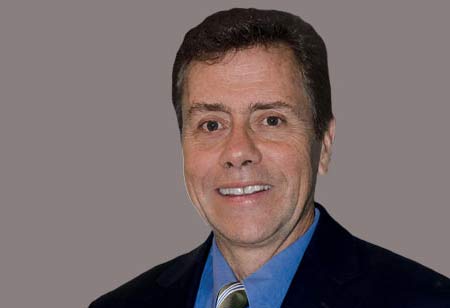
Jason Teliszczak, CEO and Founder
JT Environmental Consulting Inc.
An Expert Partner for Responsible e-Waste Recycling
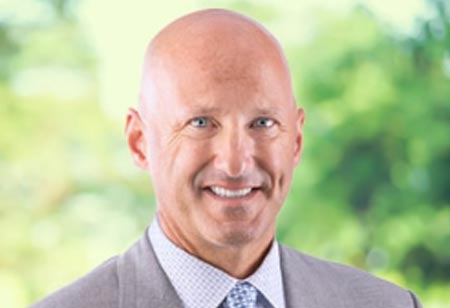
Nolan Previte, President & CEO
EBI Consulting
EBI: Taking a Unique Approach to Building Value Across Your Commercial Real Estate Portfolio
EXPLORE OUR KNOWLEDGE NETWORK
The articles from these contributors are based on their personal expertise and viewpoints, and do not necessarily reflect the opinions of their employers or affiliated organizations.
